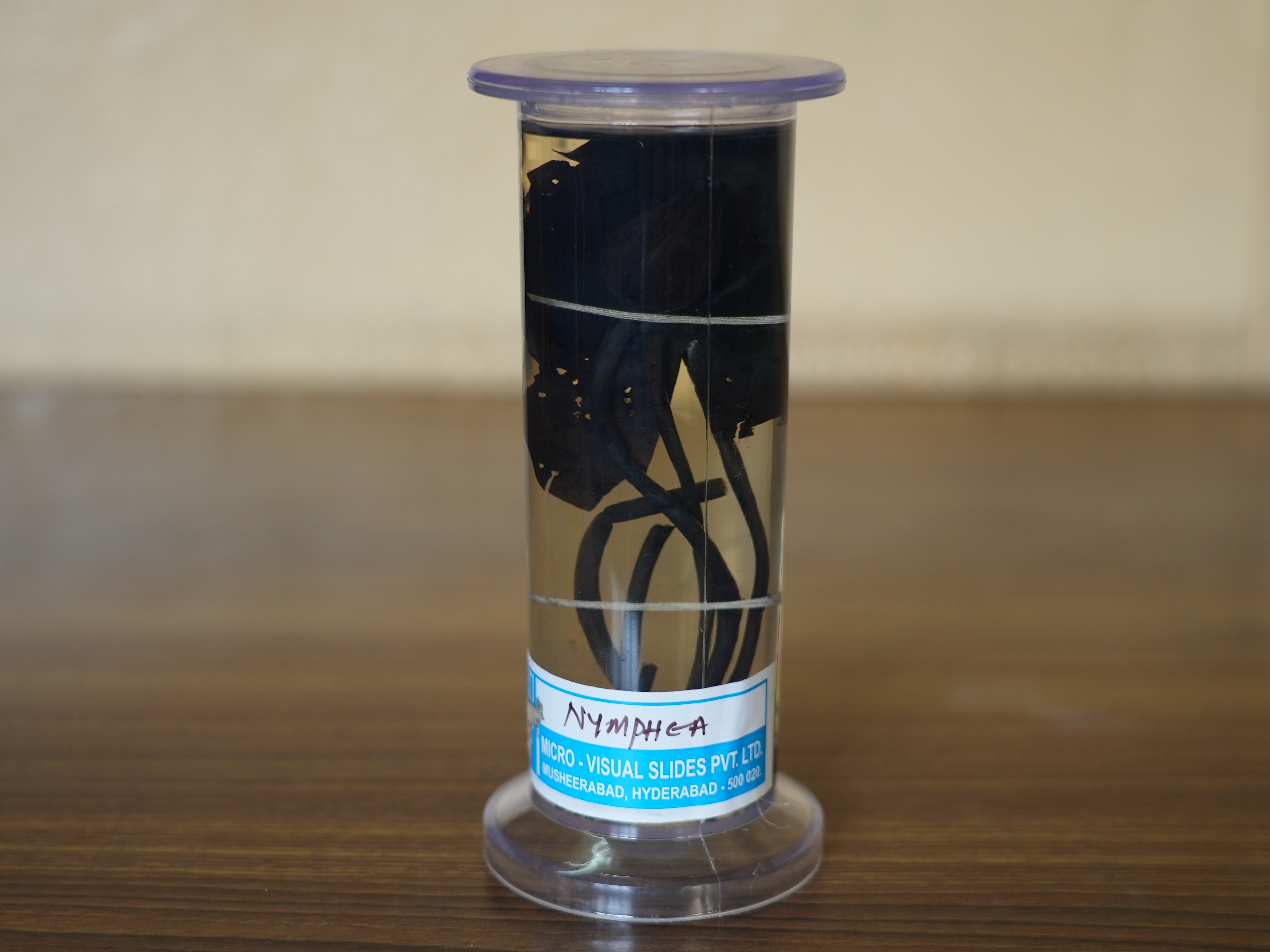
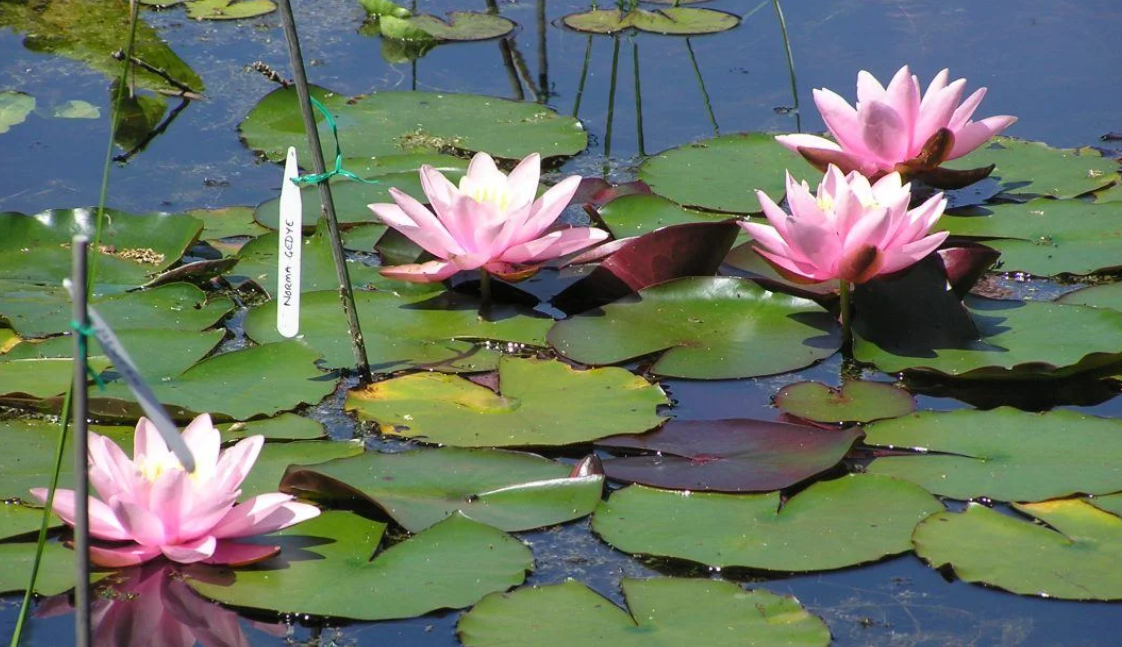
Nymphaea
Scientific name: NymphaeaL.
Common name: Waterlilly
Classification:
Division:Magnoliophyta
Class: Magnoliopsida
Order: Nymphaeales
Family: Nymphaeaceae
Genus: Nymphaea
Habitat: The fragrant water lily is a perennial aquatic plant with floating leaves that grows best in depths of three to six feet. Freshwater lakes, ponds, ditches, and slow-moving streams are suitable habitats for its growth. It can tolerate a wide range of pH. Prefers mucky to silty lake/pond bottoms. This plant spreads quickly and widely.
General characters:
• Most species of water lilies are air-filled, long stalks with rounded, waxy-coated leaves that have varying notches and float in calm freshwater environments.
• The thick, fleshy, creeping underwater stems that are buried in the mud give rise to the stalks. • The long stalks that are connected to the subterranean stems bear the fragrant, showy solitary flowers at or above the water's surface.
• The many petals of each cup-shaped flower are arranged in a spiral pattern.
• Most species flowers have a large number of stamens, or male reproductive organs. • Certain flowers only open in the morning or evening in order to draw pollinators from insects.